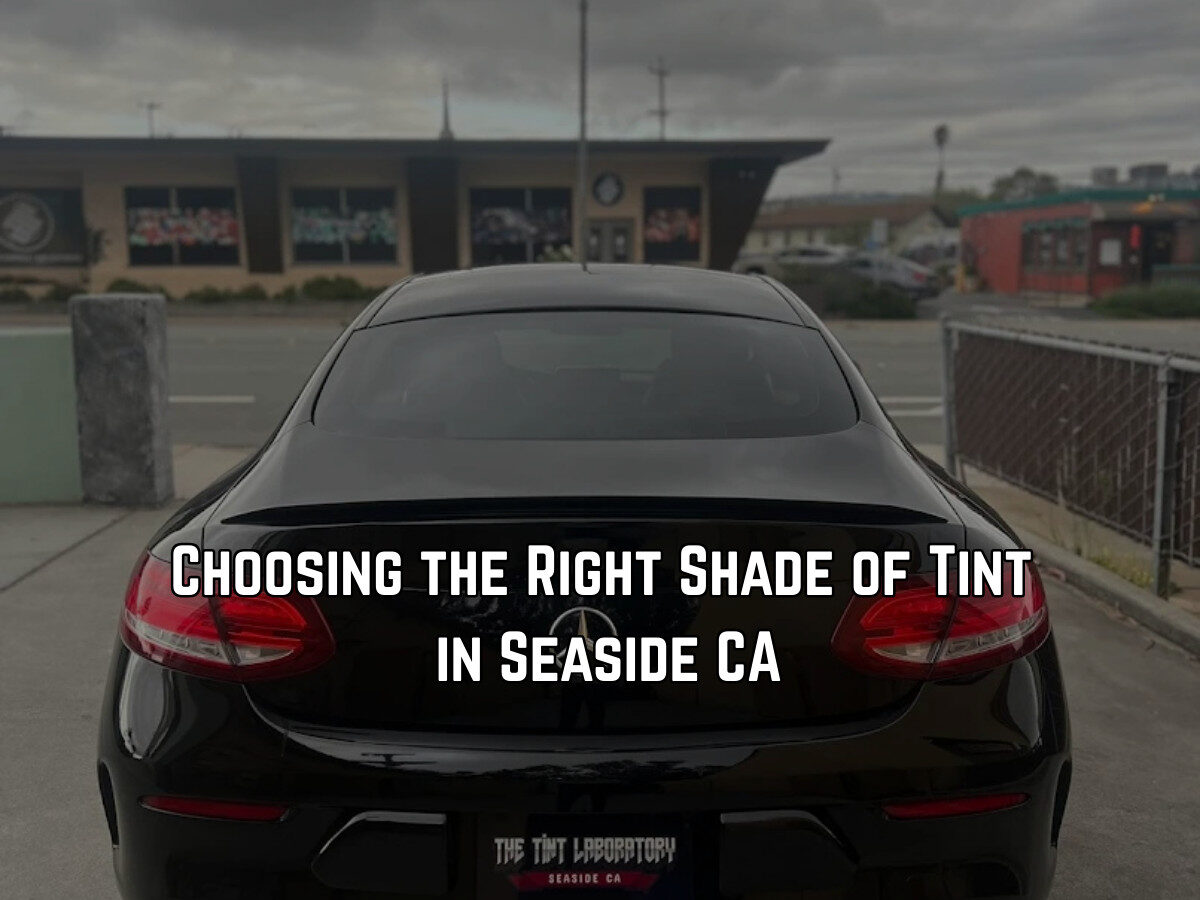
Picking the right tint shade for your windows isn’t just about going as dark as possible. The ideal shade balances your needs for privacy, heat reduction, glare control, and visibility while staying legal. In Seaside, the right choice depends on whether you’re tinting your home, car, or business, plus how much sun exposure you deal with daily.
Quick Guide to Tint Shades
- VLT (Visible Light Transmission) measures how much light passes through: 70% VLT is very light, 5% VLT is extremely dark
- California law requires 70% VLT minimum on front side windows for vehicles
- Lighter tints (50-70% VLT) work better for north-facing windows and maintaining visibility
- Medium tints (35-50% VLT) offer balanced heat rejection and privacy for most applications
- Darker tints (5-35% VLT) provide maximum privacy and glare reduction but limit nighttime visibility
- Coastal climate affects performance: salt air and intense sun make quality film selection critical
Understanding VLT Percentages
Here’s something that trips people up constantly. VLT stands for Visible Light Transmission. A 70% VLT tint allows 70% of visible light through, blocking only 30%. Lower numbers mean darker tint.
It’s backwards from what most people assume. When someone says “I want 5% tint,” they’re asking for very dark film that only lets 5% of light through. That’s what installers call “limo tint” because you can barely see through it.
For window tinting in Seaside, CA, understanding VLT helps you communicate exactly what you want to your installer. There’s a huge difference between 50% and 15% tint, and once it’s installed, changing your mind gets expensive.
Legal Limits You Need to Know
California has specific tinting laws, and they’re enforced more strictly than you might think.
Vehicle Tinting Regulations
Front windshields can only have tint on the top 4-5 inches (the AS-1 line marked on most windshields). Front side windows must allow at least 70% of light through. Back side windows and rear windshields? You can go as dark as you want, but if your rear window is tinted, you need dual side mirrors.
I’ve seen people get ticketed for illegal tint, and the fix-it ticket requires either removing the tint or replacing it with legal shade. That’s money down the drain.
Residential and Commercial Freedom
Homes and businesses have way more flexibility. No legal VLT restrictions exist for residential or commercial buildings in California. You could go completely dark if you wanted, though that rarely makes practical sense.
Some HOAs restrict exterior appearance, so check community rules before tinting. The last thing you want is installing beautiful dark tint only to get a violation notice requiring removal.
How Different Shades Perform
Let’s break down what each shade range actually does in real-world conditions.
Light Tints (50-70% VLT)
These barely look tinted from outside but still provide benefits. A 70% tint blocks about 30% of visible light, reduces UV rays by up to 99%, and cuts some infrared heat. You maintain crystal-clear visibility day and night.
Light tints work well for offices where you need natural light but want UV protection for furniture and equipment. They reduce glare on computer screens without making spaces feel darker. For cars, this is the legal range for front side windows in California.
The downside? Minimal privacy and less heat rejection than darker options. If your main goal is keeping your car cool or preventing people from seeing inside, light tint won’t cut it.
Medium Tints (35-50% VLT)
This range hits a sweet spot for many applications. A 35% tint blocks 65% of visible light, offering decent privacy during daytime while maintaining reasonable visibility at night. Heat rejection improves significantly compared to lighter tints.
Most people find 35% comfortable for daily driving. You can still see clearly in all conditions, but the interior stays noticeably cooler and passersby can’t easily see inside. For homes, this shade reduces glare without making rooms feel dark or cave-like.
Medium tints pair well with Seaside’s climate. You get solid sun protection without sacrificing the bright, airy feel coastal homes are known for.
Dark Tints (20-35% VLT)
Now we’re getting into noticeable darkness. A 20% tint blocks 80% of visible light, providing strong privacy and excellent heat rejection. Interiors stay significantly cooler, and glare virtually disappears.
The tradeoff? Night visibility drops considerably. Backing up your car after sunset becomes trickier. For homes, these shades work great on west-facing windows that get hammered by afternoon sun, but might be too dark for rooms where you want natural light.
You’ll notice colors appear different through dark tint. Blues and greens shift slightly, which bothers some people more than others.
Very Dark Tints (5-20% VLT)
This is limo territory. A 5% tint is essentially opaque from outside during daytime. Maximum privacy, maximum heat rejection, maximum glare control. But also maximum visibility reduction at night.
These shades rarely make sense for front vehicle windows (and they’re illegal in California anyway). For rear windows, they’re popular with people who prioritize privacy or have medical conditions requiring sun protection. In homes, very dark tints work for media rooms, bedrooms, or bathrooms where you want complete privacy.
Driving with 5% tint on back windows at night feels like wearing sunglasses in the dark. Some people adapt, others find it genuinely unsafe.
Matching Shade to Your Specific Needs
Different situations call for different approaches. Here’s how to think through your specific scenario.
Sun Exposure Patterns
Track where sun hits your property throughout the day. South and west-facing windows get pounded hardest. East-facing windows catch morning sun. North-facing windows receive minimal direct sunlight.
Windows with intense sun exposure benefit from darker tints. You’ll feel the difference immediately when that afternoon sun isn’t blasting through glass. But north-facing windows might need only light tint to handle UV protection without over-darkening the space.
Seaside’s coastal location means reflected light off the ocean can hit windows from unexpected angles. Consider this when planning shade selection.
Privacy Requirements
Be honest about privacy needs. Ground-floor windows facing sidewalks or neighbor’s homes might need darker tint than second-story windows. Bathrooms obviously need more privacy than living rooms.
For vehicles, think about what you keep inside and whether you park in public areas. A darker shade prevents opportunistic thieves from window shopping your belongings.
Remember that privacy is mostly one-way during daytime. At night when interior lights are on, people outside can see in more easily regardless of tint shade. If nighttime privacy matters, combine tint with curtains or blinds.
Climate and Heat Control
Seaside doesn’t get Phoenix-level heat, but summer afternoons still warm up considerably. Quality ceramic tint rejects 40-80% of solar heat depending on shade and film type.
Here’s something interesting though: heat rejection isn’t purely about darkness. Modern ceramic films reject massive amounts of infrared heat even at lighter shades. A 70% ceramic tint can outperform a 20% dyed film for heat control.
If heat rejection is your primary goal, focus on film technology first, shade second. A lighter ceramic film might serve you better than darker cheap film.
Aesthetic Preferences
Your property should match your taste. Some people love the sleek look of dark-tinted windows. Others prefer minimal change to original appearance. Neither is wrong.
For vehicles, tint shade affects overall look dramatically. A black car with 20% tint looks aggressive and sporty. The same car with 50% tint looks more subtle and professional. Consider how tint shade fits your style.
Residential tint affects curb appeal too. Very dark windows can make homes look closed-off or commercial. Lighter tints maintain a welcoming appearance while still providing benefits.
Testing Before Committing
Most quality installers offer ways to preview different shades before making final decisions.
Sample Comparisons
Request to see sample cards showing various VLT levels. Hold them up to your windows or windshield to visualize the effect. This gives you a rough idea, though samples don’t perfectly replicate installed film appearance.
Some installers have vehicles or glass panels tinted at different shades specifically for customer comparison. Seeing actual installations beats looking at sample cards every time.
Temporary Testing Methods
A few companies offer removable sample pieces you can temporarily apply to test a shade for a day or two. This helps you experience how visibility changes throughout the day and at night.
You could also visit parking lots and look at different vehicles with various tint shades. Most people are happy to tell you what percentage they have if you ask politely.
Professional Recommendations
Experienced installers know what works in Seaside’s specific conditions. They’ve seen hundreds of installations and can predict how different shades perform based on your situation.
Don’t be afraid to ask detailed questions. What shade do most customers choose for west-facing home windows? What’s most popular for SUVs? What would the installer choose for their own property?
Good installers won’t push the darkest option just because it costs more. They’ll match recommendations to your stated needs.
Common Mistakes to Avoid
I’ve seen people make the same errors repeatedly when choosing tint shade.
Going Too Dark Too Fast
The biggest mistake? Jumping straight to 5% or 15% tint without considering practical implications. That darkness looks cool in photos but becomes annoying when you’re trying to parallel park at night or read house numbers after sunset.
Start with moderate shades unless you have specific reasons for going darker. You can always go darker later, but removing too-dark tint to go lighter wastes money.
Ignoring Mixed Applications
Matching every window to the same shade rarely makes sense. West-facing windows might need 20% while north-facing windows work fine with 50%. Your home office might benefit from 35% while bedrooms get 15% for better sleep.
Think room by room, window by window. The small upcharge for using multiple shades beats living with a one-size-fits-all compromise.
Forgetting About Night Driving
Test drive a vehicle with your chosen shade at night before committing. Borrow a friend’s car or rent one if possible. What feels fine during the day might feel unsafe after dark.
Pay attention to backing up, changing lanes, and navigating unlit areas. If you’re straining to see, go lighter.
Neglecting Film Quality
Shade matters, but film quality matters more. A premium 35% ceramic tint outperforms cheap 20% dyed film for heat rejection, UV protection, and longevity. Don’t sacrifice quality to go darker.
Cheap dark tint looks purple and bubbly after a few years. Quality light tint looks great for a decade or more. Think long-term value, not just initial appearance.
Shade Combinations That Work
Strategic shade combinations solve multiple problems simultaneously.
Gradient Approaches for Vehicles
Many people use 35-50% on front side windows (staying legal), then 15-20% on rear sides and back window. This maintains good visibility while providing privacy for rear passengers and cargo areas.
The contrast doesn’t look odd because people expect front and rear windows to differ. It’s functional and legal.
Room-Specific Residential Strategy
Living rooms and kitchens typically get lighter tint (35-50%) to maintain bright, welcoming atmospheres. Bedrooms receive darker tint (15-35%) for better sleep and privacy. Bathrooms get medium-dark (20-35%) for privacy without complete darkness.
West-facing rooms automatically go a shade darker than their east-facing counterparts to handle harsher sun exposure.
Commercial Balance
Storefronts need visibility for window displays and welcoming appearance, so 50-70% works best. Office spaces go 35-50% for glare control and comfort. Conference rooms might use 20-35% for privacy during meetings.
Break rooms and storage areas can go darker since visibility matters less and heat reduction matters more.
Special Considerations for Seaside
The coastal environment creates unique factors worth addressing.
Reflected Light from Ocean
Water reflects sunlight in ways that multiply intensity. Windows facing the bay or ocean might benefit from slightly darker tint than inland properties would need for similar orientations.
This reflected light also comes from lower angles, especially during morning and evening. Standard sun calculations don’t always account for this coastal quirk.
Salt Air and Film Durability
Coastal salt air affects everything eventually. Quality tint lasts 10-15 years near the ocean if properly maintained. Cheaper film might start deteriorating within 3-5 years, turning purple or bubbling.
Darker shades hide minor imperfections better than lighter shades. If you’re near the coast, consider that a slight edge for medium to dark tints.
Fog and Visibility
Seaside gets morning fog regularly. Very dark tints combined with foggy conditions can create visibility challenges for drivers. If you commute early morning, factor fog into your shade decision.
For homes, fog actually enhances tint effectiveness. The diffused light during foggy periods already reduces glare and heat, so lighter tints handle these conditions fine.
Making Your Final Decision
Choosing the right shade boils down to prioritizing what matters most to you.
Create a Priority List
Rank your needs: privacy, heat rejection, glare control, visibility, aesthetics, legal compliance. Your top two or three priorities should drive the decision. If privacy and heat rejection top your list, lean darker. If visibility and aesthetics lead, stay lighter.
Be realistic about tradeoffs. You can’t maximize privacy while maintaining perfect nighttime visibility. Something gives.
Consider Future Needs
Think ahead a few years. Will your situation change? If you’re buying a dark sedan, 15% tint might fit your current style. But if you might trade for a minivan when kids arrive, that darkness becomes less practical for family hauling.
For homes, consider resale value. Extremely dark tint appeals to some buyers but turns off others. Moderate shades have broader appeal.
Trust Your Gut
After researching and comparing, your instinct usually knows what’s right. If a particular shade feels too dark during testing, it probably is. If you keep gravitating toward a specific percentage, that’s likely your answer.
Don’t let someone talk you into shade you’re uncomfortable with. You’re the one living with this decision daily. Similar to understanding how long window tint lasts, selecting the right shade from the start ensures long-term satisfaction with your investment.
Maintenance and Longevity by Shade
Different shades require slightly different care approaches, though basics remain the same.
Darker tints show water spots and streaks more visibly than lighter tints. You’ll need to clean them more frequently to maintain appearance. Use ammonia-free cleaners and microfiber cloths regardless of shade.
Lighter tints hide minor scratches better because there’s less contrast. Dark tints make every imperfection obvious. Handle darker tints more carefully to prevent damage.
All shades need at least 3-5 days curing time after installation before cleaning. Rushing this causes bubbles and peeling. Patience pays off regardless of darkness level.
The right shade transforms how you experience your space or vehicle. It controls heat, protects interiors, enhances privacy, and improves comfort. Taking time to choose deliberately beats rushing into the wrong shade and regretting it for years.
Seaside’s unique coastal environment makes smart shade selection even more valuable. The combination of intense sun, reflected ocean light, and salt air puts real demands on window tint. When you match shade to your specific needs while accounting for local conditions, you get performance that justifies the investment. For comprehensive climate protection, many Seaside residents also explore ceramic coating benefits for their vehicles to complement their tinting choices.
Understanding VLT percentages, legal requirements, and practical tradeoffs empowers you to make confident decisions. Whether you’re going light for maximum visibility, medium for balance, or dark for privacy, the right shade exists for your situation. Work with experienced installers who understand local conditions, test options when possible, and choose quality film that lasts. Your windows deserve tint that works as hard as you do.