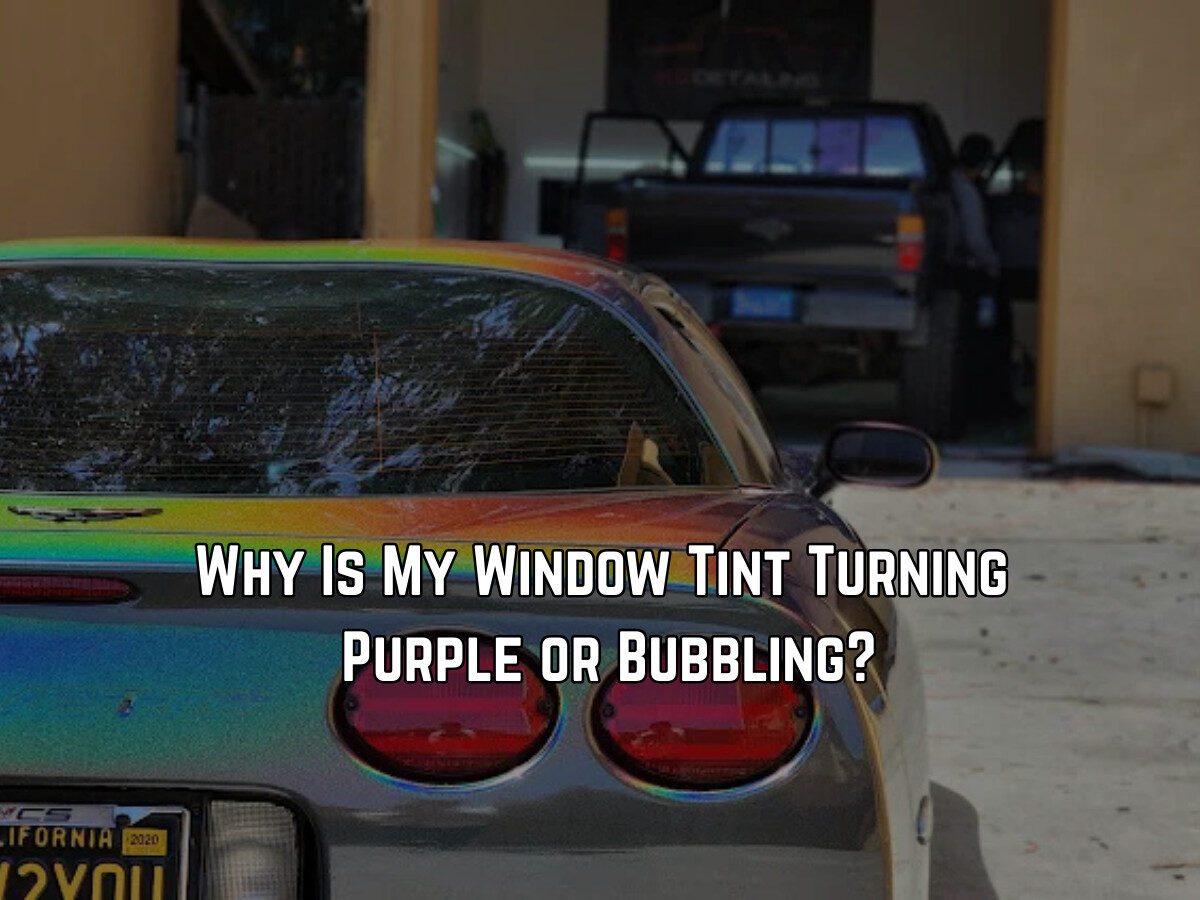
Window tint turning purple or developing bubbles means it’s failing, usually because of low-quality dyed film breaking down or poor installation technique. Purple discoloration happens when non-colorfast dyes oxidize under UV exposure, typically within 2-5 years of installation. Bubbling occurs when adhesive fails, moisture gets trapped, or the film wasn’t applied correctly in the first place.
Key Warning Signs and Causes
- Purple tint indicates dye breakdown from UV exposure in cheap, non-colorfast films
- Bubbles form from adhesive failure, contamination during installation, or moisture intrusion
- Peeling edges signal improper installation or low-quality adhesive
- Cheapest dyed films typically fail within 2-5 years, while quality films last 10-15+ years
- Environmental factors accelerate degradation: extreme heat, coastal salt air, and constant sun exposure
- Prevention requires quality film and professional installation from the start
The Purple Tint Problem Explained
That purple or pink hue creeping across your window tint isn’t just ugly. It’s a visible sign of chemical breakdown happening in the film layers.
How Dyed Film Breaks Down
Most budget window tints use dyed polyester film to create darkness and reduce light transmission. These dyes work fine initially, but they weren’t designed to withstand years of constant UV bombardment. When professional window tinting in Seaside, CA uses quality materials, you avoid this problem entirely.
Here’s what actually happens: UV rays break molecular bonds in the dye compounds. As these bonds fracture, the dye’s color structure changes. The specific wavelengths of light it absorbs shift, and what once looked neutral black or gray now reflects purplish tones.
Think of it like leaving a colored shirt in direct sunlight for months. The color fades and changes because UV radiation literally destroys the dye molecules. Same principle with window tint, except it’s happening on your car or home windows.
Why Some Films Turn Purple Faster
Not all tints degrade at the same rate. Several factors determine how quickly that purple tint appears.
Film quality makes the biggest difference. Bottom-tier dyed films use non-colorfast dyes that start breaking down within 18-24 months of constant sun exposure. Mid-grade films might last 3-5 years before discoloration becomes obvious. Premium dyed films with UV-stable dyes can maintain color for 5-7 years.
But here’s the thing: even premium dyed film eventually fails. The technology has inherent limitations. UV exposure is relentless, and organic dyes can’t withstand it indefinitely.
Sun exposure intensity matters too. A car parked in covered garage spots most of the time develops purple tint slower than one sitting in open parking lots daily. West-facing home windows in areas with intense afternoon sun fade faster than north-facing windows.
Coastal environments accelerate the process. Salt air combined with UV exposure creates harsher conditions for film durability. I’ve seen tint turn purple within 2 years in beach communities that might last 4-5 years inland.
The Chemistry Behind Color Shift
Getting slightly technical here, but it helps understand what you’re seeing. Window tint dyes are typically azo compounds or similar organic molecules. These molecules have specific arrangements of atoms that absorb certain light wavelengths.
UV radiation provides enough energy to break chemical bonds in these molecules. As bonds break, the molecular structure changes. Different structures absorb different wavelengths, so the color you perceive shifts. Most commonly, degraded dyes shift toward purple, pink, or brownish tones.
This isn’t something you can reverse. Once molecular bonds break, they don’t spontaneously repair. The purple color is permanent until you remove and replace the film.
Understanding Bubble Formation
Bubbles are even more frustrating than purple tint because they obstruct your view and look terrible immediately.
Adhesive Failure Causes
Window tint attaches to glass using pressure-sensitive adhesive. This adhesive must bond perfectly to glass while remaining flexible enough to handle temperature changes and slight glass flexing.
When adhesive fails, gaps form between film and glass. These gaps fill with air, creating visible bubbles. Several things cause adhesive failure:
Age degrades adhesive over time. Even quality adhesive eventually loses bonding strength after 10-15 years. As adhesive weakens, film starts separating from glass in spots, creating bubbles.
Heat accelerates adhesive breakdown. Cars parked in direct sun reach interior temperatures of 140-160°F during summer. That constant heat cycling stresses adhesive bonds. Low-quality adhesives fail much faster under these conditions.
Moisture penetration destroys adhesive bonds quickly. If water gets between film and glass, it interferes with adhesion. The film separates, and bubbles form. This happens most commonly along window edges where seals aren’t perfect.
Installation-Related Bubbling
Not all bubbles indicate old, failing tint. Sometimes bubbles appear shortly after installation, pointing to technique problems.
Contamination during installation causes immediate bubbling. Any dust, lint, oil, or moisture on the glass surface prevents proper adhesion. Professional installers work in clean, controlled environments specifically to avoid contamination. DIY jobs or cheap installations often have contamination issues.
Improper squeegee technique leaves water or air pockets during application. Installers use squeegees to push application solution out from under the film. If they rush or use poor technique, pockets remain. These turn into bubbles within days or weeks.
Insufficient curing time causes problems too. Fresh tint needs 3-5 days to cure fully. During this time, small water pockets naturally evaporate through the film. If someone cleans windows or disturbs the film during curing, those water pockets can’t escape properly and become permanent bubbles.
Environmental Factors
Where you live affects how quickly bubbles develop.
Extreme temperature swings stress both film and adhesive. Winters down to 20°F followed by summers at 95°F create expansion and contraction cycles. Over years, this cycling weakens adhesive bonds.
High humidity affects adhesive performance. Moisture in the air can migrate to adhesive over time, especially if film edges aren’t sealed perfectly. Coastal areas with 70-80% humidity see more bubble issues than dry climates.
Direct sun creates hotspots on glass. These hotspots can reach 180°F or higher, well above general interior temperatures. Adhesive in these spots degrades faster, creating localized bubble formation.
Identifying the Root Cause
Figuring out why your tint is failing helps determine the best solution.
Age-Related Degradation
If your tint is 7+ years old and developing purple tones or bubbles, age is probably the culprit. This is normal wear and tear. Even quality film doesn’t last forever.
Purple discoloration almost always indicates age-related dye breakdown. If the tint is only 1-2 years old and turning purple, you definitely got low-quality film.
Bubbles in older tint (10+ years) signal adhesive reaching end of life. This is expected. Bubbles in newer tint point to installation issues or defective film.
Film Quality Issues
Cheap film fails prematurely. If you had tint installed at rock-bottom prices, chances are they used economy-grade dyed film. This stuff might cost 60-70% less than premium film, but it shows within a couple years.
Look for these quality-related failure signs:
Purple or pink discoloration developing within 2-3 years almost certainly means non-colorfast dyes. Quality film maintains color longer.
Uneven fading where some areas turn purple faster than others suggests inconsistent dye distribution in cheap film. Premium films have uniform dye layers.
Bubbles forming in patterns or along entire windows indicate adhesive problems. Quality adhesives might fail eventually, but they don’t create widespread bubbling in young tint.
Installation Defects
Poor installation reveals itself quickly, usually within weeks to months.
Bubbles appearing within days of installation mean trapped air or water. This shouldn’t happen with proper technique. Small bubbles might disappear as film cures, but large ones indicate problems.
Peeling edges within the first year signal improper edge sealing or rushed installation. Installers should trim film precisely and ensure edges bond completely.
Creases, wrinkles, or gaps between film pieces point to rushed or inexperienced installation work. These flaws don’t improve over time.
Environmental Damage
Sometimes external factors damage even good tint.
Scratches from abrasive cleaning or sharp objects can compromise film integrity. Once the protective layer is damaged, moisture can penetrate, causing localized bubbling.
Chemical exposure from harsh cleaners, especially ammonia-based products, degrades both dye and adhesive. Ammonia specifically attacks the adhesive layer, leading to bubbling and peeling.
Physical trauma like hail damage, car accidents, or impacts can separate film from glass. The damaged areas then bubble or peel.
Prevention Strategies That Actually Work
Avoiding purple tint and bubbles starts with smart choices during initial installation.
Choosing Quality Film Types
Skip dyed film entirely if longevity matters. Modern ceramic and carbon films don’t suffer from purple discoloration because they don’t use organic dyes that break down under UV.
Ceramic films use nano-ceramic particles to block heat and light. These particles are inorganic and don’t degrade under UV exposure. Quality ceramic tint maintains its color and performance for 10-15 years or longer. Understanding how long window tint lasts helps set realistic expectations for different film types.
Carbon films use carbon particle technology instead of dyes. Carbon doesn’t fade or turn purple. These films typically last 7-10 years before showing any degradation.
Even among dyed films, quality varies enormously. Premium dyed films use UV-stable dyes and better adhesives. They still eventually fade, but might give you 5-7 years instead of 2-3.
Hybrid films combine technologies, often using a carbon or ceramic layer with a dyed layer. This provides better longevity than pure dyed film while costing less than full ceramic.
Professional Installation Importance
Installation quality matters as much as film quality. Even the best film fails if installed poorly.
Professional installers work in climate-controlled, dust-free environments. This prevents contamination that causes bubbles. They use filtered water in application solution and maintain clean workspaces specifically to avoid debris.
Proper surface preparation makes or breaks installation success. Professionals thoroughly clean and prep glass, removing all oils, waxes, and contaminants. They inspect for existing damage that might affect adhesion.
Experienced installers know precise squeegee techniques to eliminate water and air pockets. They understand pressure, angle, and stroke patterns that ensure complete adhesion.
Quality shops offer warranties covering both materials and workmanship. This protects you if bubbles or other defects appear due to installation problems.
Proper Maintenance Habits
How you care for tinted windows affects longevity significantly.
Wait the full curing period before cleaning. Most films need 3-5 days to cure completely. Cleaning too early disrupts the bonding process and can cause bubbles.
Use only ammonia-free cleaners. Ammonia breaks down adhesive and can damage certain film types. Simple soap and water or specialized tint-safe cleaners work fine.
Clean with microfiber cloths, not paper towels or abrasive materials. Paper towels can scratch film surfaces. Scratches compromise the protective layers and create entry points for moisture.
Avoid excessive pressure when cleaning. Gentle wiping removes dirt without stressing adhesive bonds. Aggressive scrubbing can separate film from glass over time.
When to Replace Failed Tint
Knowing when to cut your losses and replace tint saves frustration.
Clear Replacement Indicators
Purple discoloration that bothers you aesthetically means it’s time. The discoloration won’t improve and will only get worse. If you can’t stand looking at it, replace it.
Bubbles that obstruct visibility create safety issues. Any bubble in your driving sight line should trigger immediate replacement consideration.
Peeling edges that continue spreading won’t stop on their own. Once film starts peeling, adhesive failure accelerates. The film will eventually separate completely.
Performance degradation matters too. If tint no longer blocks heat effectively or your interior is fading despite tinted windows, the film has failed functionally even if it looks okay.
DIY Removal Risks
Removing old tint yourself is possible but annoying. It’s tedious work that often leaves sticky adhesive residue requiring additional effort to clean.
Heat guns or steamers help soften adhesive for easier removal. But excessive heat can damage window defroster lines or weather stripping. You need to be careful.
Razor blades remove stubborn adhesive but risk scratching glass if you’re not extremely careful. One wrong angle creates permanent scratches.
Professional removal costs some money but ensures clean results without damage. Many shops include removal in the price of new tint installation.
Upgrading to Better Film
Replacement is the perfect opportunity to upgrade film technology.
If dyed film turned purple, switch to ceramic or carbon film. The performance improvement is dramatic, and you won’t deal with discoloration again.
Consider ceramic film for maximum longevity and performance. Yes, it costs more upfront, but lasting 10-15 years instead of 3-5 years makes it cheaper long-term.
Hybrid films offer middle-ground options. Better than basic dyed film, more affordable than full ceramic. These provide solid performance and 7-10 year lifespans.
Research film brands and warranties before choosing. Manufacturers like 3M, Llumar, and SunTek offer premium products with substantial warranties when professionally installed.
Cost Considerations of Film Failure
Failed tint affects your wallet beyond just looking bad.
Hidden Costs of Cheap Tint
That bargain installation might seem like a good deal initially. But when tint fails in 2-3 years, you’re paying for removal and replacement. Suddenly that cheap tint cost you double or triple the initial savings.
Failed tint provides no UV protection. Without functional tint, your interior fades faster. Replacing faded upholstery, dashboards, or flooring costs way more than quality tint ever would.
Energy costs increase when tint stops blocking heat. You’re running air conditioning harder to compensate, wasting money monthly.
Value of Quality Installation
Professional installation with quality film costs more upfront but pays off through longevity. Tint lasting 10-15 years means one installation instead of three or four over the same period.
Warranties protect your investment. If something goes wrong, warranty coverage handles repairs or replacement at no cost. Cheap installations rarely offer meaningful warranties.
Proper installation maintains vehicle resale value. Bubbled, purple tint looks terrible and suggests poor vehicle maintenance. Quality tint looks good years later.
Regional Factors Affecting Tint Longevity
Where you live significantly impacts how long tint lasts.
Climate Impact
Hot, sunny climates stress tint more than moderate ones. Arizona, Southern California, and similar regions see faster degradation than cooler areas.
Coastal environments add salt air exposure. Salt accelerates material breakdown, affecting both film and adhesive. Beach communities need higher-quality tint to achieve normal lifespans.
Temperature extremes in either direction cause problems. Northern areas with harsh winters see adhesive stress from freeze-thaw cycles. Southern areas with brutal summers see dye and adhesive breakdown from constant heat.
High UV exposure areas need UV-stable films. Desert regions, high-altitude locations, and tropical areas all have intense UV that destroys dyed films quickly.
Environmental Pollutants
Urban areas with higher pollution expose tint to more chemical contaminants. Acid rain, industrial fallout, and vehicle exhaust all deposit chemicals on windows that can damage film over time.
Tree sap and pollen create acidic deposits that etch window film if not cleaned regularly. Properties near trees need more frequent cleaning to prevent damage.
Road salt in winter climates causes corrosion issues. Salt spray from winter road treatment gets on vehicle windows, potentially damaging tint edges and seals.
Technology Advances in Tint Durability
Modern films perform vastly better than older technologies.
Ceramic Film Benefits
Ceramic tint represents the current gold standard. These films use nano-ceramic particles suspended in polyester layers. The technology provides several advantages over dyed films.
No color shift occurs because ceramic particles don’t degrade under UV. Your tint looks the same after 10 years as it did on installation day.
Superior heat rejection comes from infrared blocking properties. Ceramic films can reject 60-80% of solar heat while maintaining a lighter appearance than dark dyed films.
Better adhesive formulations in premium ceramic films resist degradation. Manufacturers pair ceramic technology with advanced adhesives designed for long-term bonding.
Carbon Film Alternative
Carbon films occupy the middle ground between dyed and ceramic. They use carbon particle technology similar to ceramic but typically cost less.
Carbon particles don’t fade or turn purple like dyes. The film maintains appearance throughout its lifespan, which typically runs 7-10 years.
Matte finish from carbon particles reduces glare effectively. Some people prefer the subtle appearance of carbon film over the slight sheen ceramic films can have.
Hybrid Technologies
Many manufacturers now offer hybrid films combining multiple technologies. A common configuration uses carbon or ceramic layers for stability with dyed layers for additional darkness.
These hybrids avoid the purple problem because the stable carbon or ceramic layer prevents overall color shift. The dyed layer might fade slightly, but the other layers maintain appearance.
Hybrid films often provide excellent value, performing much better than pure dyed film while costing significantly less than full ceramic.
Taking Action on Failed Tint
If your tint has already turned purple or developed bubbles, here’s what to do.
Don’t ignore the problem hoping it improves. Failed tint only gets worse. Purple discoloration spreads and intensifies. Small bubbles grow larger and multiply.
Get multiple quotes for replacement. Film and installation quality varies widely, so compare options. Ask specific questions about film type, warranty coverage, and installer experience.
Verify warranty status on existing tint. If the film is relatively new and failing, manufacturer or installer warranties might cover replacement. Check your paperwork and contact the original installer.
Consider upgrading film technology during replacement. This is your chance to invest in better-performing film that won’t repeat the same problems. Quality ceramic film means you won’t be dealing with purple tint or bubbles again in 2-3 years.
Purple tint and bubbles are frustrating but predictable failures of low-quality or aged window film. Understanding the causes helps you make smarter choices when replacing failed tint. Investing in quality film and professional installation from the start prevents these issues and provides years of reliable performance. Similar to choosing the right tint shade, selecting quality materials matched to your climate and needs ensures satisfaction with your tinting investment.
Modern ceramic and carbon films have eliminated the purple tint problem entirely while offering superior heat rejection and UV protection. When paired with skilled installation, these films deliver 10-15 years of trouble-free service. That longevity and performance make them worth every penny compared to cheap alternatives that fail within a few years. Your windows deserve better than purple, bubbled film. Choose wisely, maintain properly, and enjoy clear, effective tint for years to come.